
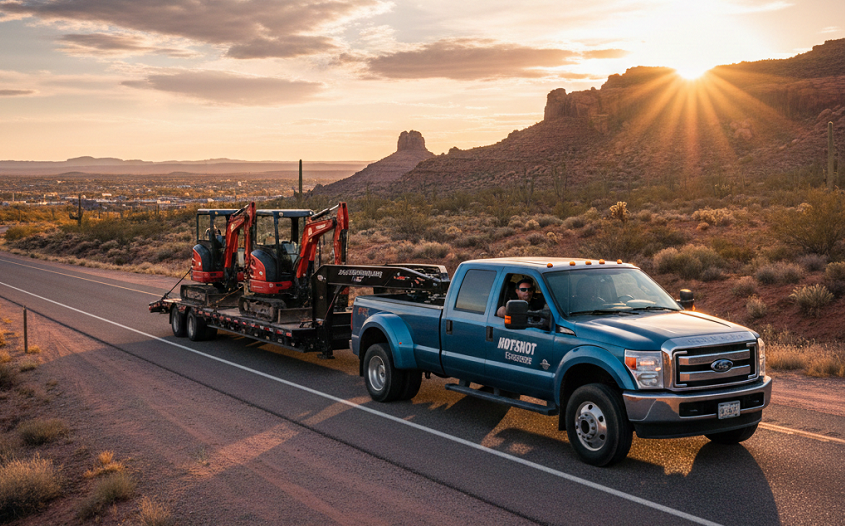
Whether you are new to driving a hotshot truck or already have experience, your focus should be on how to reach your potential earnings. As a hotshot driver, you should stay in touch with your partners (dispatchers, shippers, middlemen) to find the ideal loads. Or else, you can hire an independent hotshot dispatcher who manages all back-office work, including ensuring the loads.
What is a hotshot driver?
A hotshot driver who has the expertise to haul smaller, time‑sensitive loads. Generally, they drive a pickup or medium‑duty truck with a flatbed or similar trailer. They are professionals in expedited deliveries, serving customers who need critical parts, equipment, or materials moved quickly without using a full‑size semi‑truck.
Hotshot drivers usually operate as independent contractors or small owner‑operators, managing their own schedules, equipment, and client relationships. Because they move less‑than‑truckload (LTL) freight on direct routes, they can offer fast, flexible service at competitive rates.
Key responsibilities of a hotshot driver
A hotshot driver’s known for delivering freight safely and on time, meeting strict deadlines. For this, efficient route planning, traffic and weather monitoring, quick adaptation to schedule changes, etc., are required.
Core responsibilities include:
- Loading and unloading cargo securely,
- Maintaining the truck and trailer regularly,
- Manage records of mileage, hours, and freight details for compliance, and
- Communicating with dispatchers, brokers, or clients about pickup and delivery, and informing them of any delays.
Read Also: Comprehensive Guide for Truckers to Finding High-Paying Loads
Skills needed to be a hotshot driver
A professional who has strong driving skills and keeps focus on safety is considered an effective hotshot driver. Drivers must manage tight timelines without sacrificing cautious driving, load security, or regulatory compliance.
Important skills include:
- Time management to meet delivery deadlines.
- Ability to perform minor repairs and routine checks.
- Communication skills for negotiating rates, confirming details, and building long‑term clients.
- Ability to operate their own small trucking operation, as many hotshot drivers do.
Pros and Cons of Hotshot Driving
Due to lower startup costs and greater flexibility than in traditional semi‑truck operations, hotshot driving is more attractive to new drivers. Compared to a whole Class 8 tractor‑trailer setup, a pickup and flatbed trailer typically requires less capital, fuel, and insurance.
However, income can be unstable due to fluctuating freight demand, deadhead miles, and competition on load boards. Drivers must manage their business carefully, plan loads strategically, and maintain a strong reputation to secure consistent, profitable work. Either they hire an expert who manages all dispatch for hotshot loads.
Conclusion
From delivering urgent loads quickly and safely to planning routes and communicating clearly with parties, A hotshot driver plays a key role in time-sensitive transport.